
Every campsite measures itself
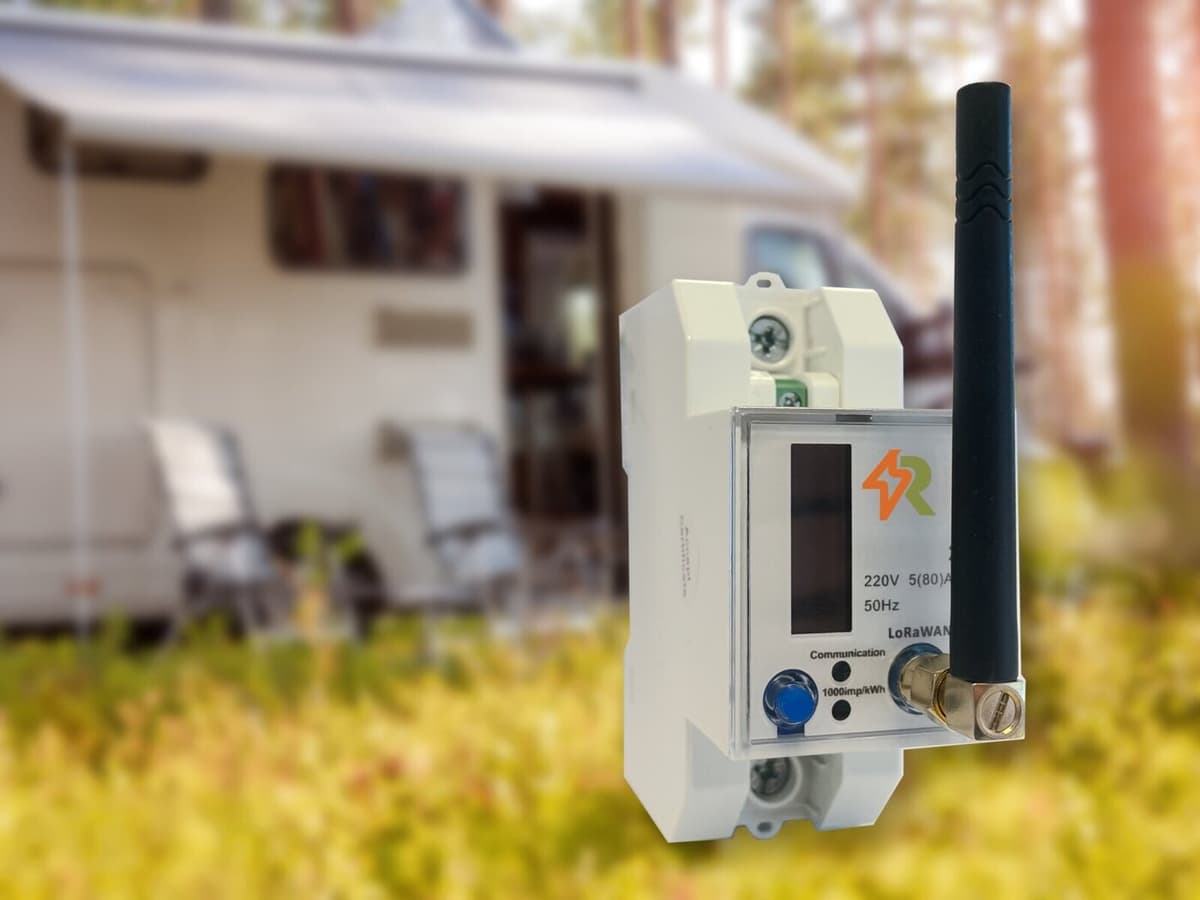
A digital kWh meter that clicks onto the DIN-rail in your existing field cabinet. You can see the consumption per site and settle up as it suits you: in advance with a credit or afterwards on the invoice.

A fixed surcharge is unfair to everyone
Those who use little pay too much, those who use a lot pay too little, and the difference comes out of your pocket. That’s not a rate, that’s an average.
The caravan with air conditioning pays the same as the tent
Two air fryers, an air conditioner, and a boiler alongside a phone charger. Your bill shows the same amount for both.
An empty spot that keeps attracting
Four hundred watts on a spot where no one is standing goes unnoticed, until you start measuring it per spot.
Only at the annual settlement do you know it
Then the season is over, the guest is already home, and there's nothing left to settle.
The existing cabinet stays put
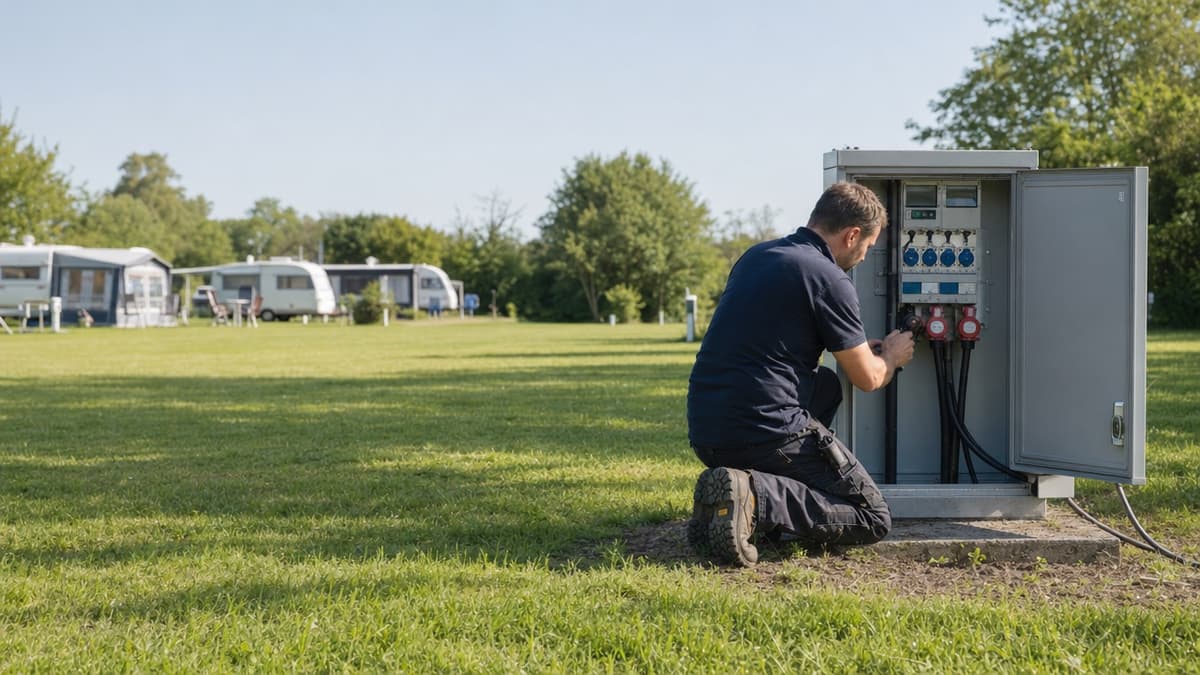
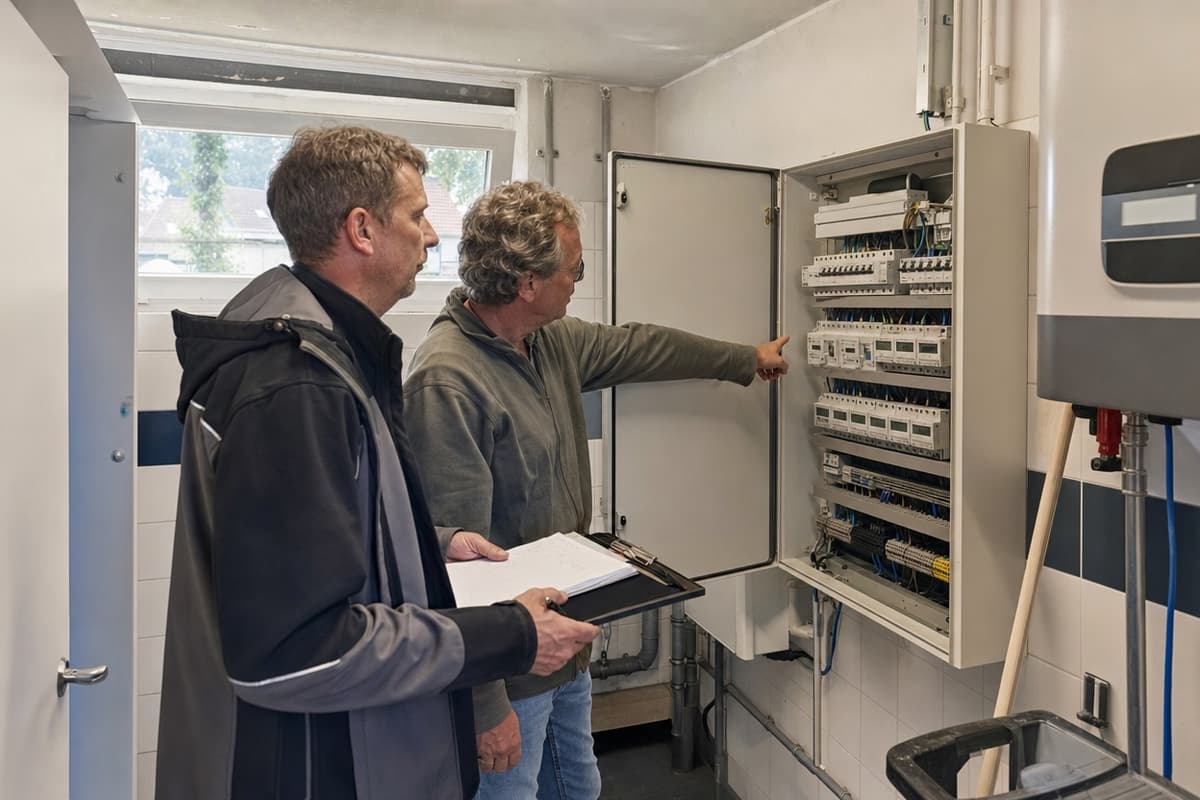
No new field cabinets, no digging, no cables across the site. The technician opens the cabinet, clicks the meter onto the rail, and closes it again. The adjacent site notices nothing.
The cabinet open, the meter on the rail
The meter is a standard DIN-rail module and fits alongside the devices already present. Your cabinet does not need to be removed and your connection remains as it is — even in older cabinets, as long as there is space on the rail.
Cabinet closed, site is online
The meter connects to a gateway on the site. No data cable to the cabinet, no SIM card per site, and not dependent on your guest Wi-Fi. One gateway serves a large part of your field.
Expand whenever it suits you
You do not have to do the entire site at once. Start with one field or a row, and add meters next season. Each new meter automatically connects to the same gateway.

What a fixed surcharge costs you
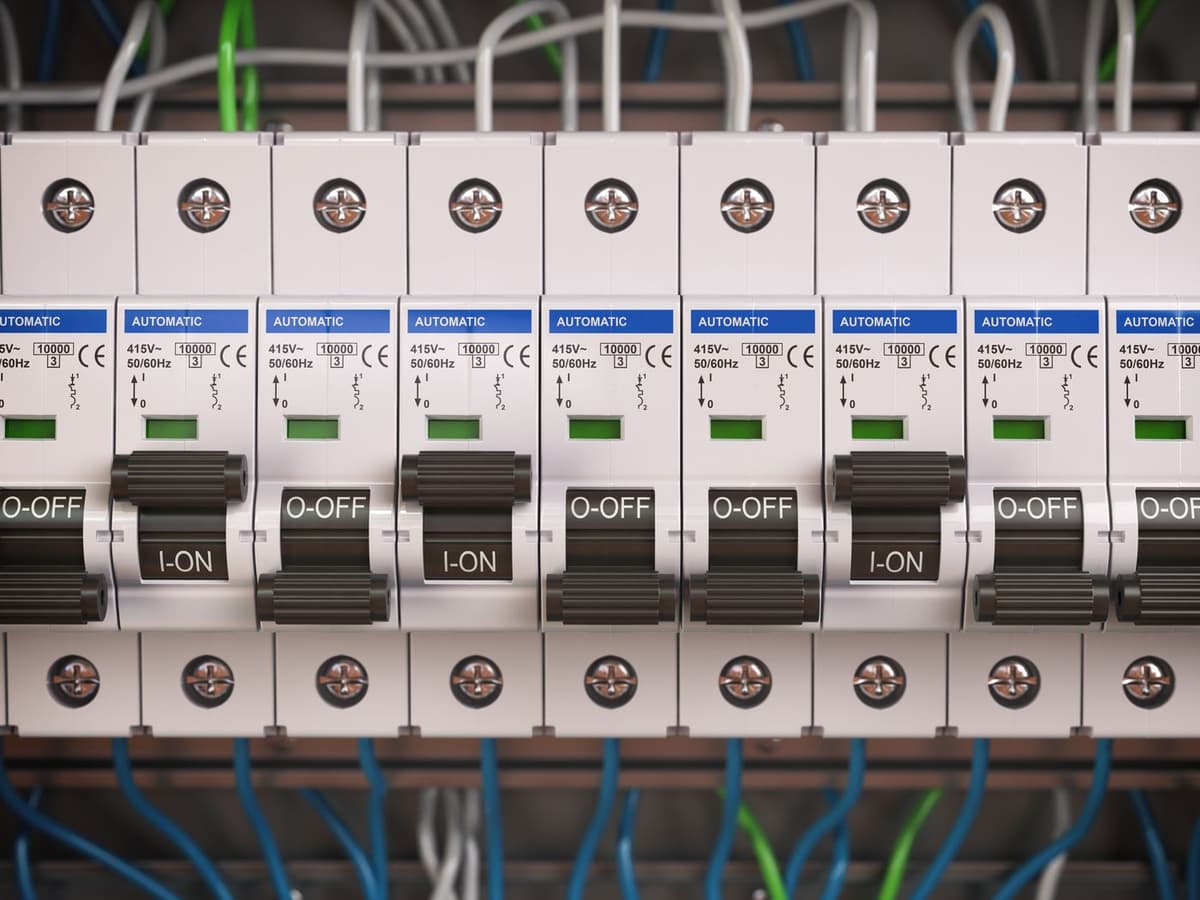
In most parks, every guest pays the same for electricity. The caravan with air conditioning and two air fryers pays the same as the tent with a phone charger. The difference comes out of your pocket.
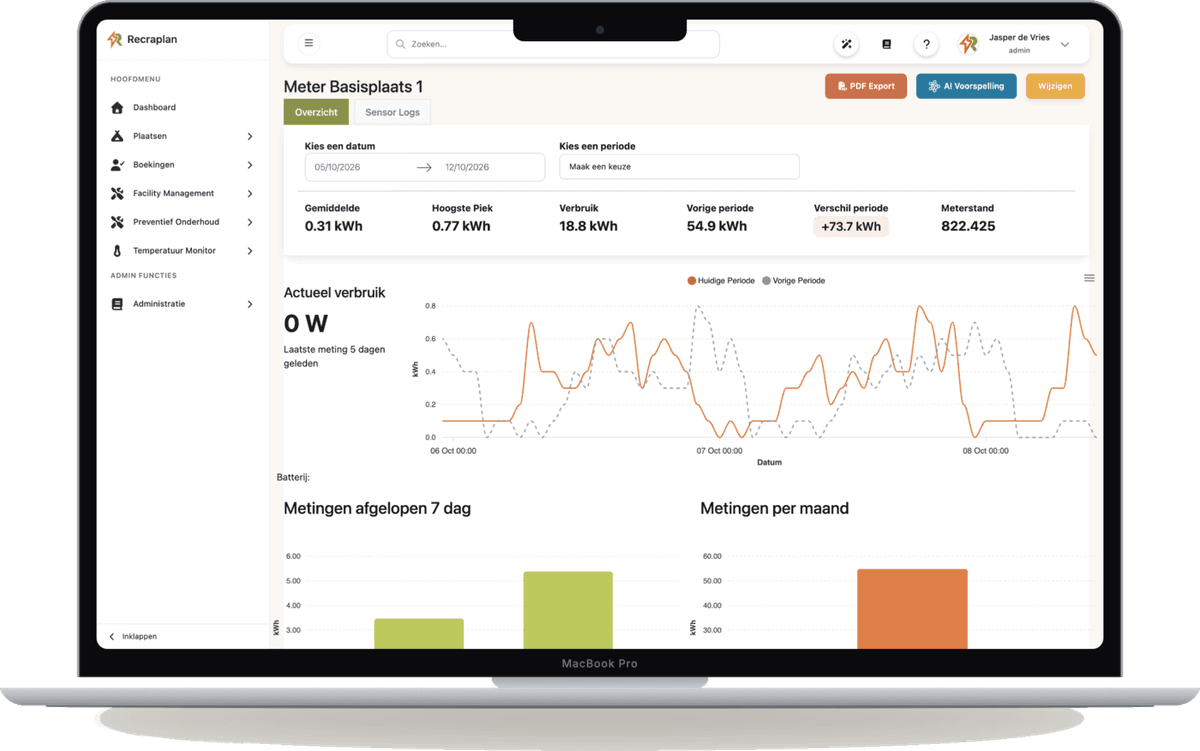
With a meter per pitch, you can see the consumption by the hour. Those who use a lot, pay a lot. Those who are frugal will see that reflected in their final bill — and will behave accordingly.
You will also see what you never saw: the pitch that draws four hundred watts at night while no one is present, the boiler in the sanitary building that keeps heating, the connection that runs hot.
The meter that can also switch
Remote reading is the minimum. This meter switches the pitch off by itself: if no one is present, the power goes out. With a hundred pitches, phantom consumption is no longer a detail.
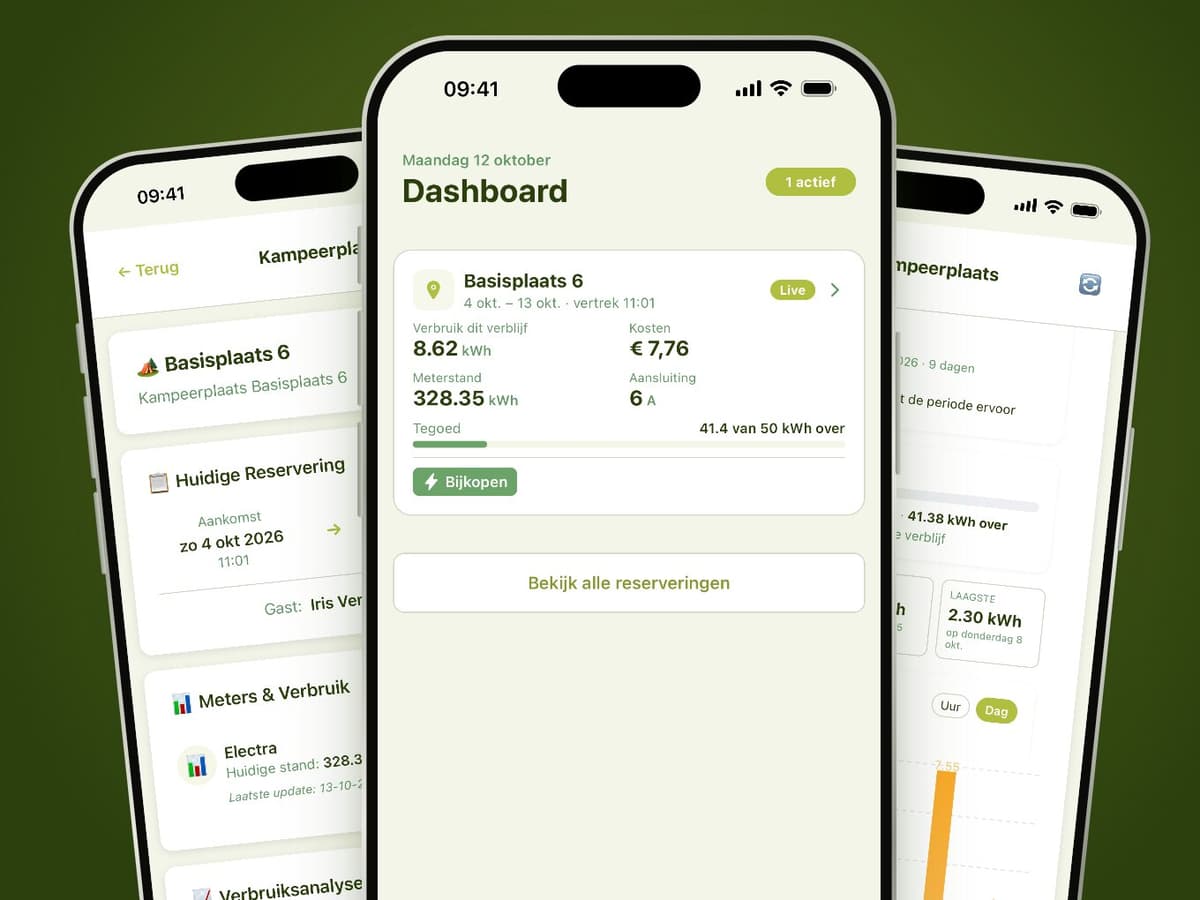
If you work with prepaid, you set a credit for each pitch. When it’s almost gone, the guest receives a message via SMS, email or WhatsApp and can top up themselves — at eleven o’clock at night, without needing to have your reception open.
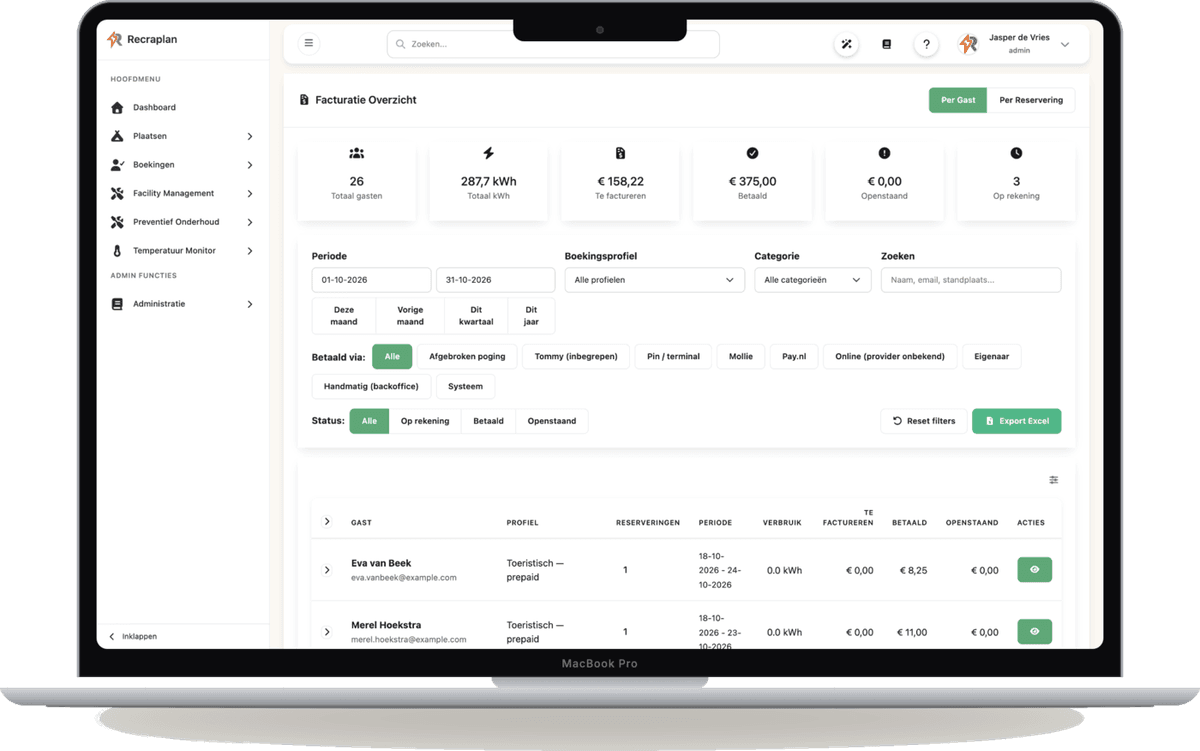
Prefer to settle afterwards? That’s also possible, settable per pitch. The readings are automatically synchronized with your booking system, so the final bill is accurate without anyone manually entering it.
Small enough for the cabinet, smart enough for the season
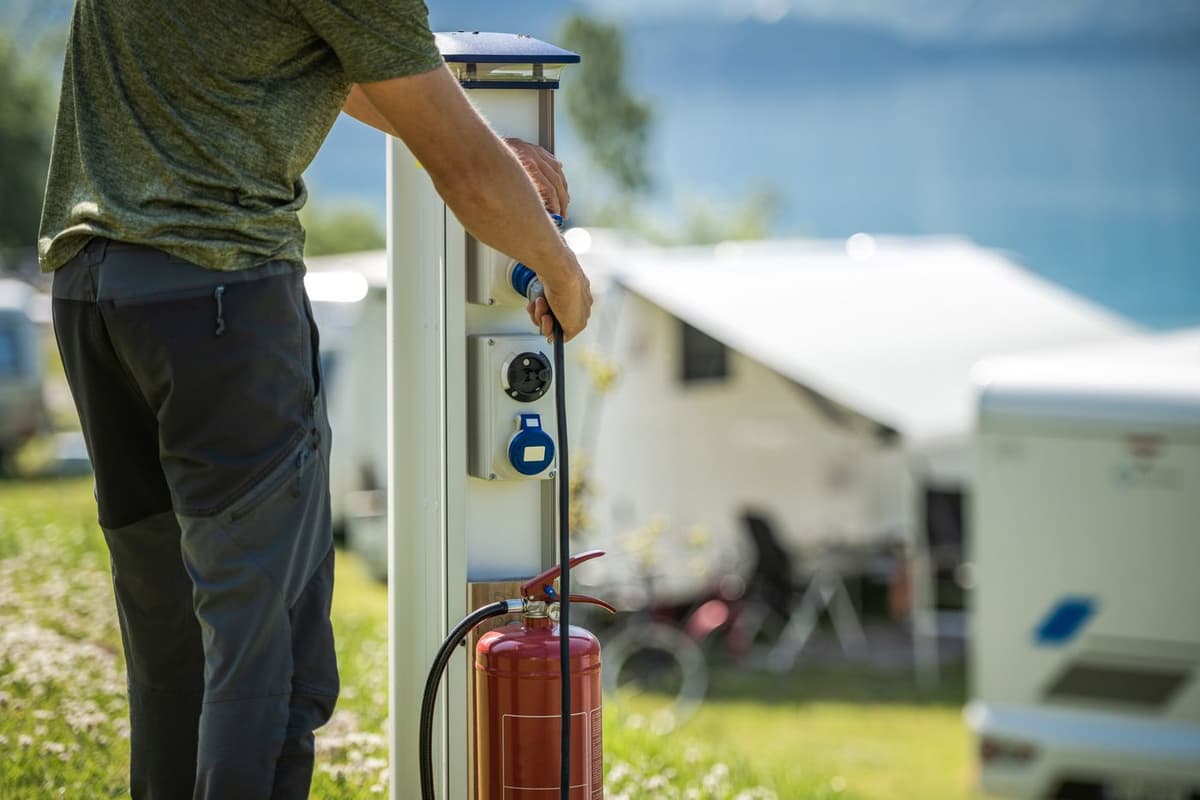
More than just reading: you can remotely turn the power on and off at a spot, and with prepaid, you let the guest purchase a credit in advance.
Prepay or post-settle
Both are possible, on the same meter. You choose per location or target group which form fits — and you can switch between seasons.
The guest first buys credit
The spot gets a balance. If the guest uses it up, the power turns off until they buy more. You don't run the risk of an unpaid bill after departure.
- No unpaid electricity bills afterwards
- The guest sees their balance decreasing, and that works more consciously than any brochure
- Recharging can be done without intervention from the reception
You settle upon departure or on the invoice
Consumption continues and is monitored per site. Upon departure, at the end of the month, or at the end of the season, you settle at the rate you've set.
- The guest notices nothing of a depleting balance
- You can set a daily credit and only charge for excess consumption
- Readings are recorded on a MID-certified meter, so the settlement is traceable
One meter, three types of guests
A camper staying for two nights requires something different than a chalet that is occupied year-round. You set it up per group, not per location.
Campers and tourist sites
Short stays, many changes, and guests you usually don’t see again. Here, it's essential that nothing is left open when the barrier closes behind them.
Seasonal sites
The same guest, the entire season. They don't want to keep an eye on their balance but prefer a final account showing how it was built up.
Chalets and permanent sites
Occupied year-round and consuming services outside the season. Often with an owner who wants to review their own account.
What it delivers
Companies that digitally meter their camping pitches save an average of about 20% on energy costs. This profit comes from two sides: consumption becomes visible, and guests pay for what they actually use.
Then there’s the time you no longer waste. No more rounds through the boxes with a clipboard, no discussions at checkout, no estimates afterwards that always shortchange someone.
What it does for your number of pitches, you can calculate yourself in the calculator.

Four things that change as soon as you measure per location
Not just on the energy bill. Most time savings are at the reception.
An average of about 20% lower energy costs
Consumption becomes visible, and guests pay for what they actually use. This changes behavior faster than any brochure.
No more rounds to check the meters
Readings come in without anyone needing to enter the field, even on the last day of the season.
No discussion at checkout
What has been measured is recorded. The settlement is traceable instead of an estimate.
Phantom consumption that stops automatically
You can remotely switch off an unoccupied site, and you don't have to remember that each time.
What it means for your installation
And then the connection is the issue
Parks are located in rural areas, where the power grid is full first. Requesting a heavier connection now takes years, not months.
Measuring per location allows you to substantiate how much power is actually demanded and when the peak occurs. This is the difference between a request with numbers and a request based on estimation — and it shows whether you can still move forward with spreading and switching.
Your guests will demand more power, not less
Electric bicycles and scooters are already present. Camping gas is being replaced by induction. The first electric cars and campers are arriving on-site. Those who don't know how much is used per location now will not know where the limit lies later.
Ratio between typical loads on one site — meant as an illustration, not as a measurement.
The demand increases, the connection does not
What each site adds up to counts towards what your area attracts at the same time. Your connection doesn't grow with it, and heavier requests now take years.
Intended as an illustration of the ratio, not as a measurement of your area.
Works together with your booking system
RecraPlan is not tied to one package. As soon as your booking system allows for a link, booking and consumption run in sync: a guest checking in receives their location, and upon departure, consumption is ready on the bill.
* With this caveat: a link can only be established if your booking system supports it. If it does not, RecraPlan works independently — you then export the consumption per period and process it in your own administration.
Everything happening on your site, on one screen
Usage per pitch, per day, per season. Adjust rates without calling us. And a display you can show to the guest.
Frequently asked questions
Is your question not listed? Call 085 2004356 or send a message via the contact page.
Calculate it for your number of sites
The calculation tool shows what metering yields and how long it takes to recoup the investment.